Closing the Loop, Opening the Future: Thriving in a Resource-Challenged World
Understanding the background and layers of circular economic transition in the ASEAN region.
ASEAN's economic growth has contributed significantly to poverty reduction, industrial development, and regional integration. However, this growth continues to depend heavily on a linear economic model of resource extraction, production, consumption, and disposal. Rising resource demand, increasing waste generation, climate-related disruptions, and growing competition for critical materials are exposing ASEAN Member States (AMS) to new economic vulnerabilities. Supply chain resilience and access to strategic raw materials are determinants of long-term sustainable development.
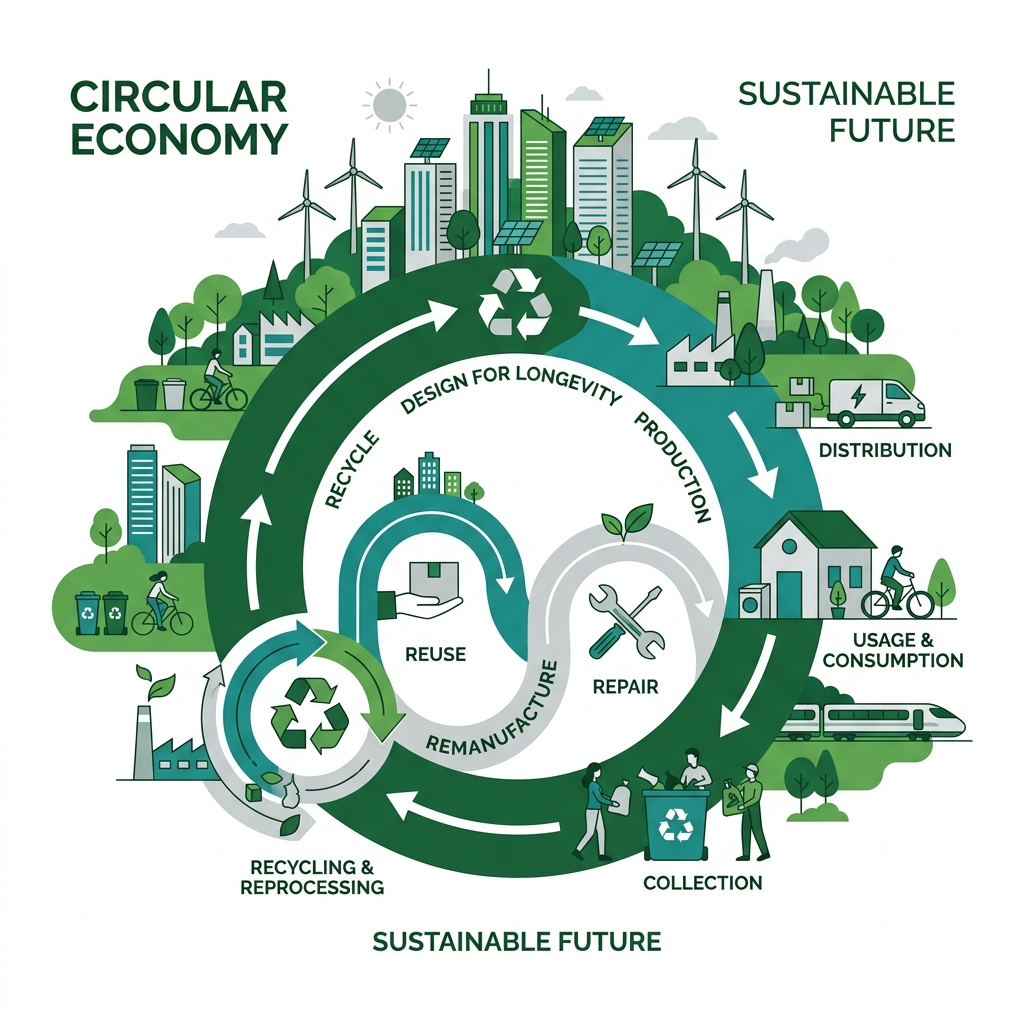
Under the theme "Closing the Loop, Opening the Future: Thriving in a Resource-Challenged World", ACEF 2026 will explore circular economy as a strategy for resource security, economic resilience, and long-term competitiveness. The Forum shifts attention towards a strategic question: how can ASEAN thrive in a resource-constrained world while maintaining economic growth, competitiveness, and social well-being?
Coordinated with the ASEAN Secretariat and relevant ASEAN sectoral bodies, the forum brings together policymakers, businesses, MSMEs, academia, civil society organisations, development partners, and international experts to advance dialogue on circular economy policies, investments, innovation, and implementation across the region.
Browse sessions across the 2-day main forum and partner side events. The program structure targets transitioning frameworks into commercial scale and human capital development. Click on any session card for detailed core content and key objectives.
High-level opening ceremony featuring distinguished keynote speakers from the ASEAN Secretariat, the European Union, and ACSDSD organizers.
Focusing on the ASEAN Circular Economy Framework, SCP implementation priorities, and the role of ATIGA in shaping regional trade, standards, and competitiveness.
Discussing national roadmaps across AMS, Extended Producer Responsibility (EPR) governance, compliance mechanisms, and trade-related regulatory instruments.
Manufacturing, industrial, and trade policies that enable circular production, sector-specific industrial dynamics, circular taxonomies, and fiscal incentives.
Data-driven recovery systems, standards for secondary materials, UNEP International Resource Panel (IRP) updates, and resource security in strategic sectors.
Structured networking among policymakers, businesses, investors, MSMEs, development partners, and academia to facilitate project matchmaking and collaborations.
Showcasing circular MSME cases, integrating informal waste workers into value chains, and using tools like the ASEAN Circular Product & Service Database.
Moving circular businesses from pilot projects to commercial scale, startup acceleration, corporate supply chains, and blended financing structures.
The role of educational systems, green skills development, activating AWGEE, and showcasing sustainable cities as living labs for circular innovation.
Consolidating key recommendations, reviewing progress on ASEAN commitments, and presenting the ACEF 2026 Chair's Summary and Action Agenda.
Focused workshop co-hosted by the International Trade Centre (ITC) and ACCMSME, focusing on MSME trade readiness, regional standards, and export potential for circular products.
Joint event by SITRA, Business Finland, and the Finnish Embassy. Presenting Nordic circular policies, green industrial transformations, and market solutions for ASEAN industries.
Interested in attending the 2026 ASEAN Circular Economy Forum in Bangkok?
Online registration for the 2026 ASEAN Circular Economy Forum in Bangkok is currently unavailable. The organizing committee is actively preparing the registration platform.
We look forward to welcoming you to Bangkok in October 2026. Please check back soon for official registration details and participation announcements.